In Late-Q2, Calgary's avg. detached home price reached $669.5K after a yearly ↑2.8%, showing continued price growth even as gains stayed relatively modest.
Calgary recorded the next-smallest yearly detached price increase in the province, placing its market in a steadier growth lane rather than a sharp-price-jump phase.
The same Late-Q2 update said Calgary continued operating with looser supply conditions, highlighting a market dynamic distinct from Alberta's tighter detached-house markets.
For clients tracking Calgary specifically, the key takeaway was balance: detached prices still moved higher, but the city's yearly pace remained comparatively measured.
That combination of price growth and looser supply conditions offered a useful snapshot of Calgary's detached market heading out of Late-Q2 overall.
Author: superadmin
-

Calgary Detached Prices: Up 2.8% Yearly
-

Calgary, AB Development Charges Shape Housing
Municipal development charges apply to new construction, helping Calgary fund infrastructure and services tied to growth while shaping project budgets early in planning.
Federal analysis found cutting or eliminating development charges can make more projects financially viable, a construction-feasibility insight Calgary stakeholders can apply carefully.
For Calgary, fee policy matters because development charges help pay for infrastructure and services while also influencing whether projects pencil out financially.
Builders say development charges are often passed to buyers and renters, affecting Calgary new-home pricing conversations and affordability planning for local households.
Calgary can track the policy math: partial cuts produce smaller, proportional impacts; elimination showed the strongest modeled support for starts where analyzed. -

Canada: Calgary Tops 2026 Best Cities List
A recent 2026 ranking compared Canadian cities on affordability, safety, climate, employment, and housing, offering a broad guide for movers seeking the right fit.
Calgary ranked first again, pairing $63.7K avg. salary with moderate living costs, strong health care, low crime, low taxes, and appeal for work-life balance.
Ottawa placed second and Edmonton third, with Ottawa praised for purchasing power and family life, while Edmonton stood out for affordable homeownership, sunshine, and festivals.
Montréal ranked fourth with bilingual, arts, and affordability appeal, while Toronto and Vancouver still made the list despite pricier homes and stronger big-city career draws.
Several smaller cities also ranked highly, reflecting demand for affordability, outdoor access, and a slower pace alongside work opportunities and family-friendly lifestyles.
The best city depended on personal priorities, with Canadian communities offering different mixes of natural beauty, urban convenience, enter -

Calgary’s Resale Market Reflects Growing Home Value
Calgary ranks 23rd in affordability among 62 major Canadian markets, with mortgage payments at 38.4% of median provincial income, slightly above the recommended one-third threshold. Despite an average home price of $689,100, affordability has improved by nearly six percentage points since 2024 due to lower interest rates and higher incomes. Other Alberta cities, like Lethbridge, remain among the most affordable nationwide.
Continue to full article -

Calgary tops list of best places to live in Canada in 2026
Calgary ranks as the best place to live in Canada due to affordable living, high quality of life, and strong career opportunities. Average monthly expenses (excluding rent) are about $1,508, with an average salary of $63,700 and home prices around $665,695. The city offers excellent healthcare, low crime, low taxes, top education, and outdoor activities near the Rocky Mountains. Ottawa and Edmonton follow in second and third place.
Continue to full article -

Mortgage Calculator
Choosing the right mortgage is crucial to avoid financial risk for both the borrower and the property. It is important to carefully compare all mortgage options based on individual goals, needs, and financial situations before committing. Expert mortgage specialists offer personalized guidance to help buyers make informed decisions throughout the homebuying process.
Continue to full article -

Calgary Tops Canada’s Best Places to Live
Calgary, AB earned the top 2026 ranking for combining affordability, quality of life, and career opportunities into one well-rounded place to live and work.
The ranking described living costs as moderate, with avg. monthly expenses for one person, excluding rent, near $1.5K, a major draw in Calgary.
Calgary's biggest employers included business services, international trade, hospitality, construction, natural resources, and manufacturing, while avg. yearly salary sat near $63.7K locally.
The same ranking highlighted excellent healthcare, low crime, low taxes, and one of Canada's best education systems as key livability strengths for residents.
Proximity to the Rocky Mountains, plus a warm, friendly atmosphere that welcomed expats, helped Calgary stand out for recreation and everyday lifestyle. -

Canada Housing Sentiment Centers on Costs
A recent Canada survey found ~88% see homes as overpriced, while ~69% say today's market is unfair to first-time buyers right now.
Among non-homeowners, ~55% reported no plan to buy within 12 mo; only ~6% planned a first-home purchase, keeping near-term demand focused on affordability.
For would-be buyers staying renters or with family, cost dominated: ~23% cited living costs, ~18% down payments, ~17% other priorities, ahead of mortgage rates.
Broader economic worries ranked lower: ~11% cited recession fears, ~8% job security, and ~6% trade tensions with the US as purchase barriers.
Homeowners also flagged planning lessons: >4 in 10 reported regret, led by maintenance demands and non-mortgage costs exceeding expectations in ownership today. -
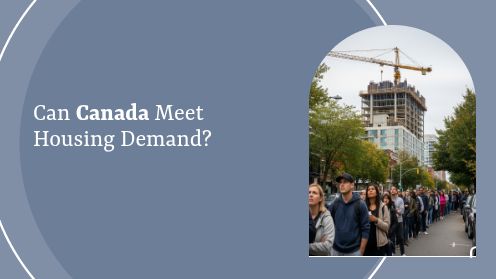
Can Canada Meet Housing Demand?
Population growth continues increasing housing demand faster than many regions can add new supply.
Governments are introducing policies designed to accelerate construction and improve housing availability.
Labour shortages, development costs, and approval delays remain significant obstacles to faster building activity.
Housing experts agree that sustained construction increases are necessary to improve long-term affordability.